The following sermon was preached on December 28th, 2025 at Faith United Methodist Church during the Sunday morning worship service. All verses quoted are from the English Standard Version.
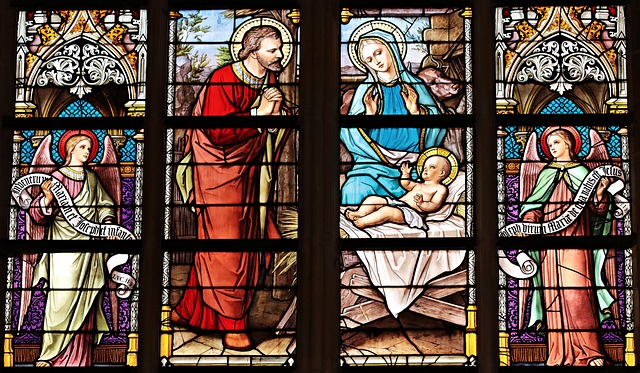
Good morning, everyone! The Christmas season is a great time to recollect about how God sent His only begotten Son into a hostile and evil world to transform it and make disciples out of sinners. Now that we’ve just celebrated the coming of Jesus Christ this past week, I decided that it would be helpful for us today to look at a key text about who the baby in the manger really was. In three out of the four Gospels, Jesus asks the disciples, “Who do you say that I am?” What a simple, yet crucial question for all of us. Who do we say that Jesus is? Our answer to that question impacts every area of our life, even what occurs to us after we pass from this life. There are many who answer, “Oh, Jesus was just some guy from Nazareth” or “He was just a teacher who tragically died at the hands of the Jewish leaders and Romans for riling up the people.” And even some others will say, “I don’t care, it doesn’t affect me.” But Jesus says that His sheep hear His voice. And those people who belong to His flock, when they hear the Gospel and are told about the salvation that is promised to those who trust in Him, they will confess, “Christ isn’t just some person; He is the God-Man. He is the Messiah promised to us that has brought salvation and will come again one day in glory.” This, dear ones, is what God desires for us to confess. But I want us to look a little deeper today. In our passage this morning, we’re going to uncover some other attributes belonging to Jesus, so when a person asks us, “Who is this Jesus that you follow?,” we can give them a proper answer that just might change their entire life for the better.
Let’s look now at God’s word and read our passage for this morning.
- 1 “Let not your hearts be troubled. Believe in God; believe also in me. 2 In my Father’s house are many rooms. If it were not so, would I have told you that I go to prepare a place for you? 3 And if I go and prepare a place for you, I will come again and will take you to myself, that where I am you may be also. 4 And you know the way to where I am going.” 5 Thomas said to him, “Lord, we do not know where you are going. How can we know the way?” 6 Jesus said to him, “I am the way, and the truth, and the life. No one comes to the Father except through me. 7 If you had known me, you would have known my Father also. From now on you do know him and have seen him.” (John 1:1-7)
Before diving into our passage, let’s zoom out for a moment and see how it fits into Jesus’ life and ministry. At this point in time, Jesus has triumphantly entered into Jerusalem and is on a collision course with His destiny: to be crucified by the Jewish leaders and the Romans. Chapter 14 sits in a particular interesting segment of John, something that is referred to by commentators as the Farewell Cycle. In chapters 13 through 17, Jesus begins to prepare His disciples for His death and resurrection, as well as for their own trials that they’ll face as they go on to establish the Church across the nations.
In the previous chapter, Jesus tells the disciples a very striking piece of news: one of their very own is going to betray the Messiah! Of course, this ends up being Judas Iscariot, and the traitorous man goes off to turn in his teacher. And mere moments after he leaves, the disciples receive even more bad news: Jesus tells them, “Where I am going you cannot come.” In an attempt to raise the men’s spirits, Peter speaks up and says, “I’ll follow you, Lord. Even unto death!” And Jesus, knowing the future, informs the eager disciple that He will actually end up (temporarily) denying Jesus instead of dying with Him.
So the apostles in our passage today, they are not in a good spot. They just keep getting slammed with more and more bad news. I can’t imagine the feelings of despair that they would have felt at this time. One of their own was going to betray them, their beloved Teacher and Lord was about to depart from them, and another one of their own was just told that he would deny Jesus. What results is that the disciples feel incredibly troubled. I imagine that many of them had just begun to feel a deep loneliness, not knowing who to trust or who to turn to once Jesus had left them to accomplish His mission.
Now, Jesus, being the loving shepherd that He is, notices that His flock is not so well with all of this news. And His response is the wonderful passage that we’ve just read. Right off the bat, Jesus plainly tells them, “Let your hearts not be troubled!” And he continues on, saying “Believe in God; believe also in me.” In other words, Jesus is telling them, “I don’t expect you to have all the answers or to figure this all out on your own; what I expect is FAITH.” He doesn’t rebuke the disciples for their feelings of worry or loneliness, but encourages them to replace these feelings with an authentic trust in God and in Himself, because He Himself is God in the flesh who makes all things possible.
But hold on, there is even more encouragement from Jesus in the following verses. Now, He tells the disciples that He is preparing a place for them all in His Father’s house, that is to say, a place in the Kingdom of Heaven, where they would be children of God and receive blessing upon blessing for all eternity as they live in perfect relationship with the Triune God. And so Jesus concludes by saying that after His mission is accomplished and the forgiveness of sins is one in His death and resurrection, He will come again to bring the disciples to Himself. What wonderful news this is! I would have loved to have seen the change in the look on the disciples’ faces as they heard these words.
In verse 5, we get to read about at least one of the men’s reactions. Thomas chimes in and humbly asks, “Lord, we do not know where you are going. How can we know the way?” And Jesus responds with that well-known verse, “I am the way, and the truth, and the life.” And He clarifies immediately after, “No one comes to the Father except through me. If you had known me, you would have known my Father also. From now on you do know him and have seen him.” All of this continues to build off the encouragement that Jesus gives to His eleven faithful followers (because the one unfaithful one left) as they wrestle with the news of their fellow disciple’s betrayal and their Teacher’s temporary departure.
Now, that well-known saying in verse 6, I’d like to spend the remainder of our time unpacking it and really grasping what Jesus is getting at. Because even though verse 6 is well-known to many, even to people who aren’t Christian, many of us have not meditated on the meaning of those words; of the meaning of saying that Jesus is the way, the truth, and the life. If perhaps someone were to come up to you and ask you, “Hey, I know you’re a Christian. Can you explain what it means that Jesus is the Way, or the Truth, or the Life? What does that mean? How does that affect me?,” I would sure hope that you would have an answer, even just a short one, so that way this other person can better know the one who has come to wash you clean of all sin and give you the gift of eternal life.
With all that being said, let’s unpack what each of these three terms mean, how they affect the way we think about and trust in Jesus, and ultimately how they inform how we ought to live our daily lives.
PART 1: Jesus the Way
Let’s start with Jesus’ first title: “the Way.” Now, it is no secret that we live in a universe of motion. When we look to the stars at night we can see the planets revolving around the Sun. Likewise, when we look at the smallest ants, we see them going about their way. And when you go to some public place – let’s say, the grocery store for example – people are about going in all different directions. And the reason that the planets and the ants and people are moving is because we have some end goal in mind. A destination or end that we’ve planned ahead of time. But not only do we have these momentary end goals and destinations, we also have a greater purpose and end that we’ve been created for.
Unfortunately, there are many people and groups in the world that try to answer what the end goal of life is from a faulty worldview. For example, the Hedonists believed that the chief end of man was to experience pleasure. The Gnostics believed that the chief end of man was to uncover secret knowledge. The Nihilists believed that man had no chief end at all, and therefore, life had no meaning. What each of these groups get wrong is that they’ve completely removed the Creator of man from the question of what man’s purpose is. Not only that, but they also fail to give a proper answer for why man should do anything at all if there is no life after death. Because why would a person strive to achieve pleasure or endure suffering if the only thing that awaits them after death is the dark embrace of oblivion? Such worldviews are thus utterly absurd and illogical.
But God’s word provides a different answer. The writer of Ecclesiastes tells us, “Fear God and keep his commandments, for this is the whole duty of man (12:13). The apostle Paul adds his own thoughts and says, “For we are [God’s] workmanship, created in Christ Jesus for good works, which God prepared beforehand, that we should walk in them” (Eph. 2:10). Jesus Himself summarizes it best just a few chapters after the one today, in John 17:3, when He prays, “And this is eternal life, that they know you, the only true God, and Jesus Christ whom you have sent.” I say again, “That they know You.” This is our end goal, dear ones. This is the end goal that we are moving towards every day: that we would abide with God and have eternal life with Him. Every other goal or purpose for us doing anything will always come secondary to this purpose in life.
Of course, this goal has a single obstacle that prevents a person from attaining it by his or her own power: and that is our sin nature. Even though we have been created to move towards God and experience His grace for all eternity, our sin nature tempts us to walk the other way. It tempts us to chase after vain and useless things. I myself struggle with this. And it tempts us to choose to not love others the way God intends for us to love others, but instead to choose to live selfishly, only ever looking out for ourselves and our own interests. This sin nature is indeed so strong that Scripture tells us that no person can ever hope to achieve salvation by his or her own strength. No amount of good works or “being nice” is going to enable you to just waltz into heaven when you pass away.
So what hope do we even have then? The authors of the Gospels tell us quite plainly that Christ came to die and rise again, and that He made a perfect sacrifice that we can be forgiven of all our sins for those who trust in Him. This, my friends, is the Gospel message. And when Jesus declares that He is the Way, what He means is that He is the path in which we may take, despite our sinful nature, and be united to God as we were created to be. Before Christ, there was no way to be reconciled with our heavenly Father. None at all. But with Christ’s mission accomplished, those who believe and are baptized are truly given salvation.
A final point on this title; notice that Jesus does not say, “I am a way” or “I am one of several ways.” No, He simply says, “I am the Way.” Luke clarifies what Christ means when he records in the Book of Acts, “…there is salvation in no one else, for there is no other name under heaven given among men by which we must be saved” (Acts 4:12). Dear ones, it is Jesus or no one else, when it comes to salvation. It is Jesus or no one else, when it comes to achieving our main purpose of existing, to be with God and enjoy Him forever in perfect love. Plain and simply, the things of this world cannot save you nor will they bring you eternal joy. Money, drugs, a better job, a nicer house, a certain sports team, your favorite politician or celebrity, whatever it is that you put your trust in or find happiness in, none of these will ever provide a way for you to receive forgiveness, healing, joy, peace, and a relationship with God than Jesus Christ can. And because of this great power of His to create a path to our true destiny, we call Jesus “the Way.”
PART 2: Jesus the Truth
Next, let’s look at Jesus’ second title: “the Truth.” Very often, when talking with someone about personal opinions, you’ll hear them say the phrase, “that’s my truth,” or “you have to live out your truth.” I’ll admit, every time I hear this phrase it’s like nails on a chalkboard. Not only is it often used by people to justify a certain decision they’re making that they really shouldn’t, the phrase “my truth” or “your truth” is an oxymoron. It’s outright contradictory. In any elementary philosophy class, they’ll teach you that A cannot equal not-A. If I’m discussing a topic with you and I say one thing is true, but you say, “no, the opposite is true” then either one of us is wrong or we’re both wrong. But we can’t both be right.
When we turn to the Word of God, we see that objective and unchangeable truth does in fact exist. And all truth comes from one eternal source: from God Himself. King David illustrates this point well when he writes in Psalm 25:5, “Lead me in your truth and teach me, for you are the God of my salvation; for you I wait all the day long.” Notice what David does not say. He doesn’t say, “God, somethings are true for you, but I’m going to live out my truth.” Not at all. Instead, he humbly asks that God would lead him to a truth that is outside of Himself. And He does this because it is only through the truth of God’s Word that one obtains salvation. We just established in the last section that there is only one way to the Father. So if that’s true, then logically only the truth that God Himself has proclaimed can be really true.
And so Jesus, in our text today, states very plainly that He is the Truth. In this simple phrase, Jesus is making Himself equal with God. To say that He is the truth is to say that He is the ultimate reality itself. Later on, when Jesus is put on trial, there is a very powerful moment where Pontius Pilate looks Jesus in the face and asks, “What is truth?” (John 18:38) not realizing that He is beholding Truth itself right before Him. Many in those days, and perhaps Pilate as well at some point later in his life, saw Jesus as a really great teacher who taught true things. But the major difference between Jesus and any other great teacher is that He literally embodied what He taught because He is and was and always will be the very source of all that is true and real.
Now of course, Jesus being truth itself doesn’t just affect how we view Him as Creator and the perfect Teacher. But Jesus being truth itself also enables us to take Him at His every word. I know we’ve all dealt with people who never live up to their word. Perhaps you are that person. Perhaps you yourself struggle to follow through with your promises to others. Thankfully, Jesus is not like this. Though He came and took on flesh, He did not take on our ability to let others down. No instead Jesus – because He is the embodiment of truth itself – always follows through with His promises. When He promises to give salvation, the forgiveness of sins, the Holy Spirit, eternal life, and so much more to those who believe in Him, we have no reason to doubt Him. Absolutely none. Certainly, we may not receive specific blessings or prosperity in this life, as Scripture affirms that we will endure trials before we pass, but nevertheless we can be sure to trust that Christ will carry us to the end, and that He will bless us for all eternity in His Kingdom.
Though knowing that Jesus is the truth is a great and glorious thing that can give us comfort, we also have to wrestle with the fact that some of the true things that Jesus and the rest of the Word of God teaches will sometimes make us uncomfortable. Sometimes, we may even get mad at what Jesus teaches. We may say, “What do you mean I have to forgive my enemies and pray for them, Jesus? What do you mean that marriage is between a man and a woman, and I can’t just sleep around? What do you mean that I should give to the poor when I have my own finances to worry about, Jesus?” And the complaints go on and on. At some point, however, when we reach a teaching or truth that Jesus gives us that we disagree with, we must be like King David. Remember what He prayed earlier? “Lord, lead me into your truth.” When we disagree with something in God’s word, we don’t demand that God changes. Instead, we ask that God would change our sinful hearts to live according to what He has declared true. And we know that what He has declared true is objectively good, because His truth came down from Heaven and took on flesh and died for us so that we would be rescued from all lies and deceit. And so, we rightly call Jesus the Truth.
PART 3: Jesus the Life
Finally, let’s look at Jesus’ third title: “the Life.” In my opinion, this is one of the most underappreciated aspects of who Jesus is. In many ways, we’ve become desensitized to the truth of Jesus being Life itself. Do we not see the grand effects of this truth all around us? When we walk outside in the forests and see the beautiful trees, the plants, the wildlife, are we not taking in the majesty of God’s living Creation? Are we also not in even more awe when we see a newborn infant smiling for the first time? For many of you parents in the room, you can probably recall back to when your own children were born and feeling that great sense of relief when you heard them cry and saw them breathing for the first time, because in that moment you were reassured that they were alive and healthy. Life certainly has this way of fascinating us, whether it be in the form of a living forest or a resting infant.
But the greatest part of all living things, is that the same loving and fatherly Being is source of life for all Creation; for all plants, animals, and humans alike. And here Jesus makes very clear that He Himself is that Being. Because Jesus is truly God Incarnate, He was active in the creation of all life. And not only did He create all human life, but Jesus also actively sustains human life each and every day. Without His life-giving grace, we would simply perish. But no, even those who do not believe in Christ, they too receive the blessing of life for a time, that one day they may come to repent and understand the Gospel. And of course, for those who confess Christ is Lord and truly trust in Him, they get an added reason to rejoice in the truth of Jesus being the Life: and this truth of course is that, for them, there is life even after death. I love the way Paul Kretzmann, a Lutheran commentator, puts it. He says, “[Jesus] is the Fountain and Giver of all true life, the life that animates all those that believe on Him, and that is to be enjoyed eternally at the end of the way.”1
In the last hundred years, Hollywood and other aspects of mainstream media have done a great job at making eternal life with Christ seem pretty boring and undesirable. For many Americans, they believe that eternal life will just be resting in the clouds, maybe playing the harp and singing songs to God all day. But friends, this is just a caricature of what we find written in God’s Word. Let me remind you that God tells us that He will recreate both Heaven and Earth, and will unite the two, and all of God’s people will be there to enjoy the blessings of God forever. You see, eternal life is not just some really long concert in the sky as some people like to think it is. The eternal life that we will experience will be a perfect and restored version of the life we live now. The New Creation will be very familiar to us and yet so incredibly different and better in a way we can’t describe. In the New Creation, we will eat with our loved ones and friends. We’ll work hard but not in vain as we do here. We’ll be free to love one another without threat of suffering. And the greatest thing of all, is that we will be in perfect communion with the source of Life Itself, with Christ Jesus.
Jesus says in John 6:35, “I am the bread of life; whoever comes to me shall not hunger, and whoever believes in me shall never thirst.” To be ultimately satisfied is the destiny of all those who trust in Christ. Without the Bread of Life, without Jesus in your life, nothing will ultimately satisfy you. Not making more money, not watching more TV, not getting in shape. Although some of those things aren’t sinful and may actually be good for you, they are not what is ultimately life-giving. And they certainly cannot give you eternal life. Instead, eternal life was won for you on the cross, by the very being who is Life itself. When Christ died and rose again He trampled death; He utterly demolished it and all of its power. And with the power of death destroyed, Christ has enabled all of those who believe in Him to receive eternal life freely so that they may enjoy Him forever, both now in this life and in the one that is to come. And therefore, He has every right to call Himself Life, the very true Bread of Life of which we partake.
CONCLUSION
Dear ones, I sincerely pray that having heard these words, that you’ve come to a truly deeper understanding of who Jesus is. When we read these words of His from the Gospels, whether it’s in church or at home, we ought to meditate on what they mean. We must ask ourselves, do I really understand, do I really comprehend what it means when Jesus says that He is the Way, Truth, and Life? With the insanity and the depravity of the world, and the way in which hopelessness abounds in our culture, we absolutely should have an answer. The world wants to tell you that there is no reason to live. The world wants to tell you that there is no objective truth. And the world wants to tell you that there is no way to salvation. Well I say this: ignore the world.
Do not fall for its lies and its temptation to lose hope. The world says that everything revolves around you and after death nothing matters. But we, the people of God, say otherwise. We say that there is hope for the lost sinner. We say that there is eternal life for the one who believes and repents. Why? Because Jesus is the way, the truth, and the life. And there is no other name by which we may be saved. There is no other messiah or God other than Jesus Christ. There is no other righteous judge than Jesus Christ. There is no other Being who loves you more than Jesus Christ. And there is no other way than Jesus Christ. Everything in our life hinges on him. Without Jesus you have nothing, but with Him you have everything and lack nothing.
My only challenge to you all this day is the same command that Jesus told His followers in verse 1: “Let not your hearts be troubled. Believe in God; believe also in me, [in Christ Jesus].” What a wonderful word of encouragement.
Let us now go to our God in prayer…
- Quote taken from Kretzmann’s Popular Commentary on John 14:5-7, http://www.kretzmannproject.org/. ↩︎

Leave a comment